


close
Choose Your Site
Global
Social Media
Views: 17 Author: Site Editor Publish Time: 2025-11-19 Origin: Site


Selecting the correct coffee cup size directly impacts beverage quality, customer satisfaction, and manufacturing efficiency. Whether you're sourcing paper cup raw materials for production or optimizing your café menu, understanding standard coffee cup sizes across different drink types—and the corresponding material specifications—ensures success. This guide covers everything from espresso demitasses to oversized iced beverages, plus essential raw material guidance for cup manufacturers.

Standard Coffee Cup Size Chart
The coffee industry uses standardized cup sizes to maintain consistency across regions and beverage types. Here's the comprehensive breakdown of sizes most commonly used for coffee service:
Cup Size | Milliliters | Height | Best For | Regional Notes |
4 oz | 118 ml | 2.4 in (6.1 cm) | Espresso, Macchiato | Universal standard |
6 oz | 177 ml | 3.1 in (7.9 cm) | Cappuccino, Cortado | European preference |
8 oz | 237 ml | 3.7 in (9.4 cm) | Flat White, Small Latte | Australian/NZ standard |
10 oz | 296 ml | 4.0 in (10.2 cm) | Medium Latte, Filter Coffee | Less common globally |
12 oz | 355 ml | 4.4 in (11.2 cm) | Standard Latte, Americano | Most popular size worldwide |
16 oz | 473 ml | 5.3 in (13.5 cm) | Large Latte, Iced Coffee | American/UK preference |
20 oz | 591 ml | 6.3 in (16.0 cm) | Extra Large Drinks, Cold Brew | Growing in popularity |
24 oz | 710 ml | 6.9 in (17.5 cm) | Specialty Iced Drinks | Premium size segment |
The 12-oz paper cup remains the global standard for takeaway coffee service, balancing adequate volume for milk-based drinks while maintaining optimal flavor concentration. The 8-oz size traditionally serves as the "small" option, particularly favored in Australian and European cafés where stronger coffee profiles are preferred.
Regional Variations: American coffee chains have popularized larger sizes, with their "Tall" (12 oz), "Grande" (16 oz), and "Venti" (20–24 oz) becoming industry benchmarks. Meanwhile, Australia maintains a tradition of 8 oz (236.6 ml) takeaway service to preserve coffee intensity.
Which Cup Size Is Right for Each Drink?
Different coffee beverages require specific cup sizes to achieve their characteristic flavor balance and texture. Understanding these distinctions ensures baristas and manufacturers produce authentic drinks that meet consumer expectations.
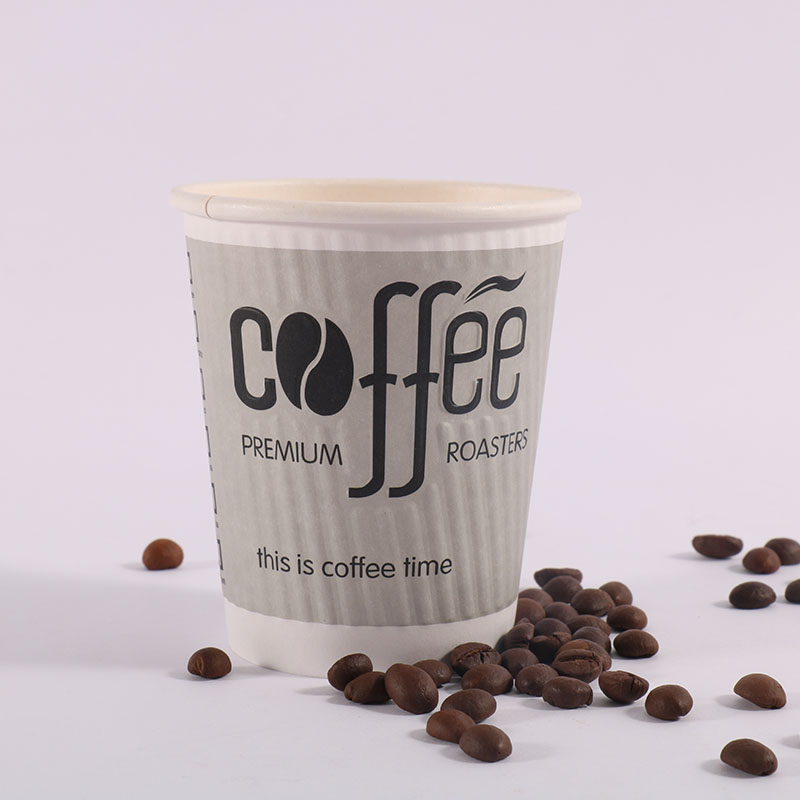
Espresso, Double Espresso & Macchiato Cup Size
The standard espresso cup measures 2–3 oz (60–90 ml), with the double espresso using 3–4 oz (90–120 ml). This precision sizing is non-negotiable because:
Concentrated flavor depends on minimal volume and rapid consumption
Small cups preserve the prized crema layer throughout service
Traditional Italian espresso culture specifically utilizes 2-oz demitasse cups
Macchiato, meaning "marked" or "stained," uses the same 2–3 oz espresso cup with just a small mark of steamed milk foam.
Flat White, Cappuccino & Cortado Cup Size
The standard flat white measures 5–6 oz (150–180 ml), critically distinct from lattes due to its higher espresso-to-milk ratio (1:2 versus 1:3). A true flat white demands this compact size to maintain its signature dense microfoam and concentrated coffee flavor.
The standard cappuccino also uses 5–6 oz (150–180 ml), traditionally achieving a 1:1:1 ratio of espresso, steamed milk, and foam. Cappuccinos served in 12-oz cups fundamentally lose their essential character, becoming indistinguishable from lattes.
The cortado pairs equal parts espresso and steamed milk in 4–5 oz (120–150 ml), offering balanced intensity without excessive milk volume.
Latte & Americano Cup Size
The standard latte ranges from 8–12 oz (240–355 ml), with most coffee shops offering 8 oz as "small" and 12 oz as "regular". The latte's milk-forward character (1:3 espresso-to-milk ratio) accommodates significantly larger volumes compared to flat whites and cappuccinos.
The americano similarly uses 8–12 oz (240–355 ml) to accommodate espresso diluted with hot water while maintaining adequate body and flavor.
Cold & Iced Beverage Cup Size
Iced Latte, Iced Americano & Cold Brew: 16–20 oz (473–591 ml) sizes accommodate ice volume while preserving adequate coffee concentration. A typical iced americano uses a 16 oz cup with multiple espresso shots plus water and ice, while cold brew concentrates—which are brewed specifically to withstand dilution from melting ice—are commonly served in 16–20 oz cups.
Frappuccinos & Blended Beverages: 16–24 oz (473–710 ml) cups suit these frozen specialty drinks, which contain blended coffee, ice, milk, and syrups requiring significant volume.
The larger format for iced drinks accounts for ice occupying approximately 50% of cup volume, yet still delivers concentrated coffee flavor compared to hot beverages of similar total volume.
For Cup Manufacturers: Raw Material Ordering Guide
Selecting appropriate cupstock paper specifications directly impacts cup forming efficiency, product performance, and production costs. This section guides manufacturers through material selection and sourcing essentials.

Understanding GSM and Coating Specifications
GSM (grams per square meter) measures paper weight and structural capability. Higher GSM provides greater rigidity, insulation, and heat resistance—critical factors for different cup sizes and beverage types. Typical specifications in coffee cup manufacturing include:
Cup Size | Recommended GSM | Coating Type | Heat Rating | Application |
2.5–3 oz | 150–170 | Single PE | Up to 90°C | Espresso, Ristretto |
4–6 oz | 160–190 | Single PE | Up to 95°C | Cappuccino, Cortado |
8 oz | 190–210 | Single PE | Up to 95°C | Small Latte, Flat White |
12 oz | 210–230 | Single PE / Double PE | Up to 95°C | Standard Latte, Hot Beverages |
16 oz | 230–250 | Double PE | -18°C to 95°C | Large Latte, Iced Coffee |
20–24 oz | 230–280 | Double PE | -18°C to 95°C | Iced Beverages, Cold Brew |
32 oz | 250–330 | Double PE | -18°C to 95°C | Extra Large Cold Drinks |
Single PE coating (12–18 gsm) suits hot beverages, leaving the exterior uncoated for better printability. Double PE coating (15–25 gsm per side) prevents condensation on cold drinks and iced beverages.
For hot applications, single PE coated paper balances cost efficiency with reliable moisture protection; for cold applications, double PE coated paper prevents condensation damage to branding and ensures structural integrity during extended holding times.
Alternative Coating Options: PLA, Water-Based & Clay
While PE coating dominates the industry due to proven cost efficiency and performance, leading paper cup raw material manufacturers like Kindeal Paper also supply specialized coating technologies for specific market segments:
PLA (Polylactic Acid) Coated Paper offers a biodegradable option derived from renewable resources, fully compostable under industrial conditions. However, PLA's temperature limitation (approximately 70°C maximum) makes it unsuitable for hot coffee service, restricting use to cold beverages and specialty applications. Material costs run 20–30% higher than PE.
Water-Based Barrier Coatings eliminate plastic content entirely, using aqueous dispersions that allow cups to be recycled in standard paper facilities without contamination. Performance varies by formulation, but water-based options provide balanced sustainability and cost-effectiveness compared to PLA.
Clay-Coated Cup Paper combines interior PE protection with an exterior glossy clay finish, delivering superior print quality for premium branding without requiring plastic exterior layers. This dual-coating approach excels when brand presentation justifies higher material costs.
How to Order Specifications from Cup Raw Material Manufacturers
When sourcing cupstock paper from manufacturers like Kindeal Paper, provide clear specifications ensuring material compatibility with your equipment and beverage requirements:

Cup Size & Application: Specify exact ounce sizes (e.g., 8 oz, 12 oz, 16 oz) and primary coffee cup type (hot coffee, iced coffee, blended specialty drinks)
Base Paper GSM: Select from the recommended ranges above, balancing structural requirements with cost efficiency
Coating Configuration: Select single PE 1S for hot coffee cups with printable exterior, double PE 2S for cold/iced coffee applications requiring condensation prevention, or specialty coatings (water-based, PLA, clay-coated) for sustainability or premium branding needs
Format Options: Choose jumbo rolls for high-speed automated machines, die-cut sheets for custom batches or offset printing, pre-cut paper fans with ±1mm tolerance for sidewalls, or bottom roll strips for cup bases
Certifications: Verify FDA approval (U.S.), EU 10/2011 compliance (Europe), FSC certification (sustainable sourcing), and food-grade safety standards are included
Quality Standards: Confirm GSM tolerance within ±3% and verified coating quality and uniformity to ensure reliable machine performance.
Request sample rolls or sheets to test compatibility with your specific forming equipment and beverages before committing to bulk orders. High-volume production typically operates on container loads, so confirm lead times, pricing, and technical support availability during supplier evaluation.
Partnering with Kindeal Paper for Coffee Cup Success
Selecting the right cupstock paper directly determines your cup manufacturing efficiency and final product quality. Kindeal Paper delivers comprehensive solutions across the full spectrum of coffee cup requirements, from cost-effective PE-coated standard sizes to premium PLA, water-based, and clay-coated specialty options.

With over 30 years of expertise in disposable cup materials, Kindeal Paper's technical team provides customized recommendations tailored to your specific production equipment, beverage portfolio, sustainability goals, and market positioning, ensuring that material specifications align with machine requirements and performance expectations.
Begin with a free technical consultation on your cup sizes, production volumes, coating preferences, and certifications required. Request sample rolls or sheets to validate material compatibility with your actual forming equipment before bulk commitment. Kindeal Paper's transparent pricing, rapid lead times, and quality assurance protocols make sourcing paper cup raw materials straightforward and reliable.
Contact Kindeal Paper today to discuss your coffee cup material needs and receive a customized quotation matching your exact specifications and volume requirements.

